
There are places on Earth that defy description — places where the sheer scale of nature leaves you speechless, where every turn reveals something so beautiful, so ancient, and so alive that your understanding of the world quietly shifts. The Ngorongoro Crater is one of those places. Nestled within Tanzania’s northern safari circuit, this UNESCO World Heritage Site and one of the Seven Natural Wonders of Africa is a destination unlike anything else on the planet. Ngorongoro Crater safari tours bring travelers into the heart of this collapsed volcanic caldera, where an extraordinary concentration of wildlife thrives in a self-contained ecosystem that has remained largely unchanged for hundreds of thousands of years.
Whether you are a first-time safari traveler or a returning Africa enthusiast, the Ngorongoro Crater demands to be experienced. This comprehensive guide covers everything you need to know — from the geology and wildlife to the best tour options, ideal travel seasons, and expert tips for making the most of your visit.
The Ngorongoro Crater: A Natural Wonder Explained
The Ngorongoro Crater was formed approximately two to three million years ago, when a massive volcano — believed to have been as tall as Mount Kilimanjaro — erupted and collapsed inward upon itself, creating a vast, bowl-shaped depression known as a caldera. Today, the crater stretches 19 kilometers across, covers a floor area of roughly 260 square kilometers, and sits at a rim elevation of approximately 2,300 meters above sea level. The crater walls rise steeply to heights of 400–600 meters, creating a natural enclosure that has shaped a unique and self-sustaining ecosystem below.
Inside the crater, a remarkable variety of habitats coexist within a relatively compact area — open grasslands, acacia woodlands, a soda lake (Lake Magadi), swamps, and a seasonal river system. This diversity of terrain supports one of the densest concentrations of wildlife anywhere in Africa, with an estimated 25,000 to 30,000 large animals residing permanently within the crater floor.
What makes the Ngorongoro Crater truly exceptional is that most of its resident wildlife does not migrate. Unlike the Serengeti, where the great herds move seasonally across vast distances, the animals of the Ngorongoro are essentially permanent residents — making year-round wildlife sightings not just possible but virtually guaranteed.
Wildlife of the Ngorongoro Crater
The crater’s enclosed ecosystem functions like a natural zoo — but one created entirely by geology, climate, and time, without any human design. The result is a wildlife density that astonishes even experienced safari veterans.
The Big Five
Ngorongoro is one of the best places in Africa to see all five of the Big Five in a single day. Lions are abundant and highly visible on the open crater floor. African buffalo move in large herds across the grasslands. Elephants — predominantly large, old bulls — descend into the crater from the surrounding highlands. Leopards are more elusive but are spotted regularly in the woodland fringes. Most significantly, Ngorongoro is home to one of Africa’s largest surviving populations of black rhinoceros — a critically endangered species that is notoriously difficult to find elsewhere. Seeing a black rhino in its natural habitat is a privilege that draws wildlife enthusiasts and conservationists from across the globe.
Big Cats
The crater’s lion population is famous for its size and accessibility. Prides are frequently seen resting on the open plains, hunting wildebeest and zebra, or playfully interacting in the morning light. Cheetahs are also present, though less common than in the Serengeti. The density of prey animals ensures that big cat activity on the crater floor is consistently high throughout the year.
Birdlife
With over 500 recorded bird species, the Ngorongoro Crater is a paradise for birdwatchers. Lake Magadi attracts thousands of lesser and greater flamingos during certain seasons, turning the lake edge into a shimmering pink spectacle. Crowned cranes, kori bustards — the world’s heaviest flying bird — ostriches, secretary birds, and an extraordinary variety of raptors are all regularly observed. The combination of open grasslands and wetland habitat makes birding in the crater exceptionally diverse and rewarding.
Other Notable Wildlife
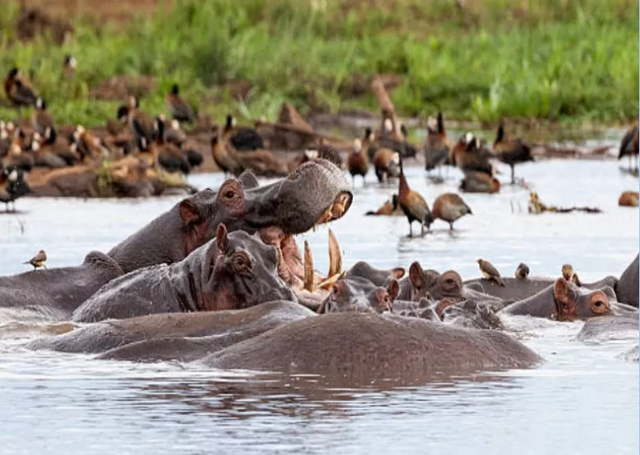
Beyond the Big Five and birds, the crater floor teems with wildebeest, plains zebra, Thomson’s and Grant’s gazelles, spotted hyenas (one of the most concentrated hyena populations in Africa), jackals, servals, bat-eared foxes, and hippopotamuses wallowing in the swamp areas near Ngoitoktok Spring.
Types of Ngorongoro Crater Safari Tours
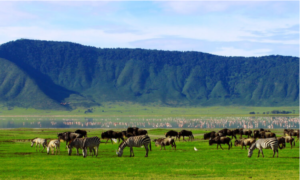
Understanding the variety of available tour formats helps you match your experience to your travel style and budget.
Day Trip Crater Floor Safaris
The most common format for Ngorongoro Crater safari tours, day trips involve descending into the crater early in the morning, spending four to six hours game driving across the floor, and ascending back to the rim by early afternoon. These tours are ideal for travelers combining Ngorongoro with a broader northern Tanzania itinerary. Game drives are conducted in 4×4 safari vehicles with pop-up roofs, guided by experienced, licensed naturalists.
Overnight Crater Rim Safaris
Staying at a lodge or tented camp on the crater rim transforms the Ngorongoro experience from a day excursion into a fully immersive adventure. Waking up above the clouds, watching the mist clear to reveal the crater below, and descending at dawn when wildlife activity is at its peak — these are experiences that day visitors simply cannot access. Rim accommodation ranges from mid-range lodges to world-class luxury properties.
Luxury Private Crater Safaris
Exclusive private tours offer dedicated vehicles, private guides, gourmet bush picnics on the crater floor, and accommodation at premium lodges such as Ngorongoro Crater Lodge, one of the most celebrated safari properties in Africa. These tours are particularly popular with honeymooners, anniversary travelers, and those seeking an indulgent, personalized wildlife encounter.
Combined Northern Circuit Safaris
Ngorongoro Crater safari tours are most frequently incorporated into a broader northern Tanzania itinerary that includes the Serengeti, Tarangire National Park, and Lake Manyara. These multi-park packages offer enormous value, allowing travelers to experience radically different landscapes and wildlife profiles across a 7–14 day journey. The Ngorongoro typically serves as either the dramatic opening or climactic conclusion of these itineraries.
Walking and Cultural Safaris
The Ngorongoro Conservation Area is unique in that it is a multiple-use area, meaning the indigenous Maasai people co-exist with wildlife across the conservation zone (though not on the crater floor itself). Cultural visits to Maasai bomas (homesteads), walking safaris along the crater rim, and guided hikes through the highland forests add a compelling human and cultural dimension to a Ngorongoro tour.
Photography Safaris
For serious wildlife photographers, the Ngorongoro Crater offers unparalleled opportunities. The density of wildlife, the dramatic rim-to-floor light during early morning descents, and the presence of rare species like the black rhino make the crater one of the most photographically rewarding destinations in Africa. Specialist photography tours provide expert guidance on technique, positioning, and timing to help guests capture extraordinary images.
Best Time to Visit the Ngorongoro Crater
Unlike the Serengeti, where the best time depends heavily on the migration calendar, the Ngorongoro Crater offers excellent wildlife viewing year-round due to the permanent resident animal population. However, certain seasons have distinct advantages:
Dry Season (June – October)
The dry season is widely considered the best time for Ngorongoro Crater safari tours. Vegetation is lower, animals concentrate around water sources, and the crater floor offers clearer sightlines. Predator activity is particularly high during this period. The crater rim can be chilly at night, so pack accordingly.
Short Dry Season (January – February)
A superb period combining excellent crater wildlife viewing with the opportunity to witness the Serengeti calving season nearby. Crowds are lower than peak season, and the weather is warm and dry.
Green Season (March – May)
The long rains bring lush green landscapes and a dramatic atmospheric quality to the crater. Birdlife is at its most spectacular, with migratory species present in abundance. Fewer tourists mean a more intimate experience, and accommodation rates are often lower. Roads on the crater floor can become muddy, requiring a capable 4×4.
November – December
A transitional period with short rains and retreating tourist numbers. The crater remains beautiful and wildlife activity remains strong, making this an underrated window for Ngorongoro visits.
Top Lodges and Camps for Ngorongoro Crater Safari Tours
Ngorongoro Crater Lodge
Perched dramatically on the crater rim, this iconic lodge is one of Africa’s most celebrated safari properties. Its blend of Maasai cultural influences and extravagant design creates an atmosphere of theatrical luxury. Floor-to-ceiling glass walls in each suite frame views directly into the crater below.
&Beyond Ngorongoro Crater Lodge
A masterpiece of design and hospitality, this property offers butler-attended suites, gourmet dining, and some of the most breathtaking views in Tanzania. It remains a benchmark for luxury crater-rim accommodation.
Ngorongoro Serena Safari Lodge
Built into the crater rim with exceptional panoramic views, the Serena Lodge combines warmth, comfort, and superb service at a slightly more accessible price point. An excellent choice for mid-to-high range travelers.
Rhino Lodge
A well-regarded mid-range option on the crater rim offering reliable comfort, good cuisine, and direct access to the descent roads for early-morning game drives.
Essential Tips for Ngorongoro Crater Safari Tours
- Descend Early: Wildlife activity on the crater floor peaks in the early morning. Aim to be through the descent gate by 7:00 AM for the best game viewing conditions and the most dramatic light for photography.
- Stay on the Rim Overnight: A rim lodge stay transforms the experience. The morning descent through swirling mist into the wildlife-rich floor below is something day visitors never experience.
- Book Licensed Guides: The Ngorongoro Conservation Area Authority (NCAA) requires all visitors to use licensed guides. Ensure your operator complies with all NCAA regulations and employs certified naturalists.
- Respect the Rules: Vehicles must stay on designated tracks. Getting out of the vehicle is strictly prohibited except at designated picnic sites. These rules exist to protect both wildlife and visitors.
- Dress in Layers: The crater rim sits at over 2,300 meters — mornings can be surprisingly cold. Pack a warm fleece or light jacket even if you are visiting in the dry season.
- Combine With Serengeti: Booking a package that includes both Ngorongoro and the Serengeti (ideally with Tarangire and Lake Manyara) creates the definitive northern Tanzania safari experience.
- Allow a Full Day: Half-day crater visits feel rushed. Allow a minimum of five to six hours on the crater floor to do justice to the experience.
Conservation and the Ngorongoro Conservation Area
The Ngorongoro Conservation Area (NCA) is a UNESCO World Heritage Site and a Biosphere Reserve, recognized for its extraordinary natural and cultural significance. Managed by the Ngorongoro Conservation Area Authority, it is one of Africa’s most progressive conservation models — balancing wildlife protection, tourism, archaeological heritage (Olduvai Gorge, one of the world’s most important paleoanthropological sites, lies within the NCA), and the rights of indigenous Maasai communities.
Conservation fees collected from tourism are reinvested into wildlife management, anti-poaching operations, community development programs, and habitat restoration. Choosing a reputable operator for your Ngorongoro Crater safari tour directly contributes to this conservation ecosystem — your visit is a vote for the protection of one of the world’s most irreplaceable natural treasures.
Conclusion
There is a reason the Ngorongoro Crater is spoken of in the same breath as the world’s greatest natural wonders. It is ancient, abundant, and arrestingly beautiful — a place where geology and biology have conspired to create something that feels almost impossible. Ngorongoro Crater safari tours offer more than a wildlife experience. They offer a window into deep time, a humbling encounter with nature’s abundance, and a sense of perspective that is increasingly rare in the modern world.
From the morning mist curling off the crater rim to the golden afternoon light catching a lion’s mane on the open plains below, every moment inside the Ngorongoro is a gift. Whether you are here for a single day or a week, whether you are a birdwatcher, a photographer, a honeymooner, or a family on your first African adventure — the Ngorongoro Crater will not simply meet your expectations. It will redefine them.
Book your tour. Descend into the crater. And let Africa do the rest.
Key Takeaways
- The Ngorongoro Crater is the world’s largest intact volcanic caldera, spanning 19 km across with 25,000–30,000 permanent resident animals — making it a year-round safari destination.
- It is one of the best places in Africa to see all Big Five — including the critically endangered black rhinoceros — in a single day.
- Ngorongoro Crater safari tours range from day-trip game drives and overnight rim stays to luxury private tours, photography safaris, and cultural Maasai experiences.
- The dry season (June–October) and short dry season (January–February) offer the best overall game viewing, but the crater delivers rewarding wildlife encounters in every season.
- Staying overnight on the crater rim is strongly recommended — the early-morning descent through mist into a wildlife-rich floor is an experience that day visitors miss entirely.
- The Ngorongoro Conservation Area is a UNESCO World Heritage Site, and tourism fees directly fund conservation, anti-poaching, and Maasai community programs.
- Ngorongoro is most powerful when combined with the Serengeti, Tarangire, and Lake Manyara as part of a complete northern Tanzania safari circuit.
Frequently Asked Questions (FAQ)
Q1: How long does a Ngorongoro Crater safari tour take? A typical crater floor game drive lasts 5–7 hours. Most tours descend in the early morning (around 7:00 AM) and ascend by early to mid-afternoon. Visitors staying on the rim overnight can organize two separate crater descents — one at dawn and one in the late afternoon — for an even richer experience.
Q2: Can I see the Big Five in one day at the Ngorongoro Crater? Yes — and it is one of the few places in Africa where this is realistically achievable. Lions, elephants, buffalos, and black rhinos are reliably sighted on the crater floor. Leopards are more elusive but are spotted regularly in the woodland areas. A full day on the crater floor significantly increases your chances of completing the Big Five.
Q3: Is the Ngorongoro Crater suitable for first-time safari travelers? Absolutely. The combination of dense wildlife, manageable scale, well-maintained tracks, and excellent guiding infrastructure makes Ngorongoro one of the most accessible and rewarding safari destinations in Africa. First-time safari travelers frequently describe it as the highlight of their entire African journey.
Q4: What is the difference between the Ngorongoro Crater and the Serengeti? The Serengeti is a vast open ecosystem famous for the annual Great Wildebeest Migration and requires strategic seasonal timing to optimize game viewing. The Ngorongoro Crater is a compact, enclosed caldera with permanently resident wildlife, offering reliable Big Five viewing year-round. Most Tanzania itineraries combine both for a complementary experience.
Q5: Are there rhinos in the Ngorongoro Crater? Yes. The crater is home to one of Tanzania’s most significant populations of critically endangered black rhinoceros. Rhino sightings are never guaranteed, but the Ngorongoro Crater consistently offers some of the best chances of seeing wild black rhinos anywhere in Africa.
Q6: What is the accommodation like near the Ngorongoro Crater? Accommodation on the crater rim ranges from world-class luxury lodges — such as the iconic Ngorongoro Crater Lodge — to solid mid-range options like Ngorongoro Serena Safari Lodge and Rhino Lodge. All rim lodges offer stunning crater views. There is no accommodation on the crater floor itself — only designated picnic sites for day visitors.
Q7: How much do Ngorongoro Crater safari tours cost? Costs depend on accommodation tier, group size, and season. Budget options incorporating the crater into a shared group tour start from approximately USD $200–$300 per person per day. Mid-range packages range from $350–$600 per day, and luxury crater tours at premium rim lodges can reach $1,000–$2,000+ per person per day.
Q8: Do I need a visa and vaccinations to visit the Ngorongoro Crater? The Ngorongoro Crater is located in Tanzania. Most nationalities require a Tanzanian visa, obtainable online via e-visa or on arrival. Yellow Fever vaccination is required if arriving from an endemic country. Malaria prophylaxis, Hepatitis A and B, and typhoid vaccinations are strongly recommended. Consult your doctor or travel health clinic at least 6–8 weeks before departure.

