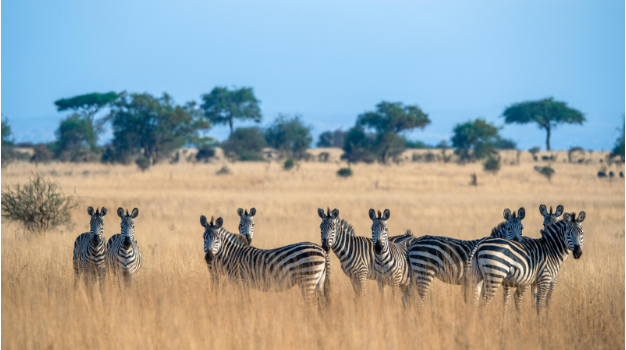
Ancient baobab trees older than memory. Elephant herds that darken the riverbanks. A wilderness that rewards those curious enough to look beyond the obvious — welcome to Tarangire.
Introduction
Every great safari destination has its signature. The Serengeti has the migration. Ngorongoro has the crater. But ask the most seasoned Tanzania safari guides which park surprises their guests most consistently, and the answer is almost always the same: Tarangire National Park. Tanzania’s fifth-largest national park has spent decades quietly delivering some of East Africa’s most extraordinary wildlife encounters to the travellers who include it in their itineraries — and being overlooked by those who do not.
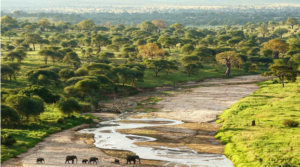
A Tarangire safari offers something increasingly rare in the world of popular wildlife destinations: a sense of genuine discovery. The park does not shout for attention the way the Serengeti does. It does not command the geological drama of Ngorongoro. It simply exists, in all its ancient, unhurried beauty — baobab forests stretching across tawny hillsides, the Tarangire River threading like a silver ribbon through a landscape that seems to belong to another, older time, and elephant herds so numerous that the sight of them gathered along the riverbanks during the dry season remains one of the most powerful wildlife spectacles in all of Africa.
Covering approximately 2,850 square kilometres in northern Tanzania, Tarangire National Park sits within the broader Tarangire-Manyara ecosystem — a vast mosaic of national parks, wildlife management areas, and community conservation lands that together support one of the greatest concentrations of wildlife in East Africa. The park’s name derives from the Tarangire River, the single most important feature in its ecology and the engine of the wildlife spectacle that makes it such a compelling safari destination.
This guide covers everything you need to know about planning a Tarangire safari — from the park’s unique ecology and seasonal wildlife patterns to accommodation options, what to look for, and why this magnificent, underappreciated destination deserves a central place in your Tanzania itinerary.
The Tarangire River: The Heartbeat of the Park
To understand the Tarangire safari experience, you must first understand the river that gives the park its name. The Tarangire River is the only permanent water source across a vast area of the surrounding ecosystem, and during the dry season — roughly from June through November — its banks become one of the most remarkable wildlife gathering places in Africa.
As the seasonal water sources across the broader Tarangire-Manyara ecosystem dry up, animals from hundreds of kilometres of surrounding wilderness are drawn inexorably toward the permanent water of the Tarangire River. The effect is cumulative and astonishing. By August and September — the peak of the dry season — the river corridor supports concentrations of elephants, zebra, wildebeest, buffalo, hartebeest, eland, impala, oryx, giraffe, waterbuck, and gazelle that rival anything in East Africa. Predators follow the prey, and lions, leopards, cheetahs, and African wild dogs operate at high activity levels throughout the dry season months. Gorilla Trekking Tours provide an unforgettable wildlife experience, allowing travelers to explore lush forests and observe majestic mountain gorillas in their natural habitat.
This seasonal convergence is the Tarangire’s equivalent of the Serengeti’s Great Migration — a natural phenomenon driven by the same fundamental ecological logic, equally spectacular in its own terms, but experienced by a fraction of the visitors who witness the famous wildebeest crossings to the north. For travellers fortunate enough to be in Tarangire during the peak dry season months, the wildlife density along the Tarangire River is an experience that provokes the same kind of instinctive, wordless awe as any of Tanzania’s headline attractions.
The Elephants of Tarangire: Africa’s Most Impressive Gatherings
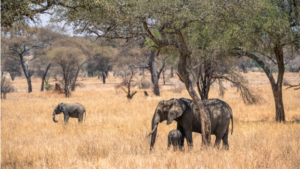
If the Tarangire safari has a single defining characteristic, it is elephants. Tarangire National Park supports one of the largest elephant populations in Tanzania — estimates suggest between 2,500 and 3,000 individuals regularly use the park, with numbers swelling significantly during the dry season as elephants from across the broader ecosystem converge on the river.
The scale and intimacy of elephant encounters in Tarangire is extraordinary. During the dry season, it is not uncommon to observe herds of 200, 300, or even 500 elephants gathered at a single river location — great grey masses moving with quiet deliberation through the tamarind trees and down to the water’s edge, calves staying close to mothers, old bulls moving with the measured dignity that only genuine age produces. The ground shakes. The air smells of dust and warm animal and river mud. And somewhere in the middle of this ancient gathering, you sit in your vehicle in complete silence, understanding instinctively that you are witnessing something that needs no commentary or context.
Tarangire’s elephants are also notable for their remarkable tuskers — older bulls who carry ivory of a size and beauty rarely seen anywhere else in East Africa, reflecting both the age structure of the population and the decades of protection the park has provided. Encounters with these magnificent old individuals, moving alone or in small bachelor groups through the baobab landscapes, are among Tarangire’s most memorable safari moments.
The Baobab Landscape: A Safari Unlike Any Other
Tarangire’s visual character is defined by something no other Tanzania safari park can replicate: its ancient baobab trees. These extraordinary trees — Adansonia digitata — are among the longest-lived organisms on Earth, with some individuals in Tarangire estimated to be over 1,000 years old. They dominate the park’s central and northern landscapes with their extraordinary forms: vast, barrel-shaped trunks that can reach 9 metres in diameter, skeletal branches reaching against the sky like the roots of an inverted tree, the whole silhouette suggesting something from before recorded time.
The baobabs of Tarangire do more than create a visually distinctive safari landscape — they are a keystone species in the park’s ecology. Their hollowed trunks provide shelter for insects, snakes, small mammals, and birds. Their flowers are pollinated by bats. Their fruit is consumed by elephants, who in turn distribute their seeds across vast distances. In years of good rainfall, the baobabs flower in spectacular fashion, their large white blossoms opening at night to release a heavy, yeasty fragrance that carries across the warm evening air.
Photographing Tarangire’s baobabs — whether framing a single ancient giant against the burnt-orange light of a dry-season afternoon or capturing a family of elephants moving through a forest of them — produces images of a quality and uniqueness that no other Tanzania park can deliver. For wildlife photographers, the combination of exceptional elephant encounters and one of Africa’s most visually dramatic landscapes makes Tarangire a destination of the first order.
Wildlife Beyond the Elephants: Tarangire’s Full Roster
While elephants and baobabs define the Tarangire identity, the park’s wildlife roster extends far beyond its headline act, encompassing species and sighting opportunities that reward curious, attentive safari travellers.
The Big Five in Tarangire
Tarangire supports four of the Big Five reliably — lion, leopard, elephant, and buffalo are all present in good numbers. Rhino are not found in Tarangire, which distinguishes it from Ngorongoro, but the density and accessibility of the other four is exceptional. Lions are frequently encountered in the riverine woodland along the Tarangire River, and leopards — while always secretive — are regularly spotted in the larger trees along drainage lines. Buffalo herds in the hundreds move through the park’s open grasslands, providing reliable sightings throughout the year.
African Wild Dog
Tarangire is one of the best parks in Tanzania for African wild dog sightings — a species so rare and so elusive that encountering a pack in full coursing pursuit of prey is considered by many experienced safari enthusiasts to be the single most exciting large predator event in Africa. Wild dog packs move through Tarangire’s woodland and open areas, and while sightings are never guaranteed, the park’s combination of suitable habitat, manageable vegetation density, and relatively low visitor numbers gives it a strong wild dog encounter probability compared to more heavily visited parks.
Tree-Climbing Lions
One of Tarangire’s most distinctive wildlife curiosities is the presence of tree-climbing lions — behaviour that is unusual enough to be considered a significant sighting anywhere it occurs. The lions of certain areas of Tarangire, particularly around the Silale Swamp region in the northern part of the park, have developed a habit of resting in the larger trees — a behaviour associated with escaping ground-level insects and benefiting from elevated breezes. Encountering a lion draped over the branch of a large tree is a uniquely Tarangire experience and one of the park’s most celebrated photographic subjects.
The Extraordinary Birdlife
Tarangire is one of East Africa’s premier birdwatching destinations, with over 550 recorded species including several endemics and near-endemics found nowhere else in Tanzania. The park is particularly celebrated for its diversity of dry-country species — the Ashy Starling and the Yellow-collared Lovebird are Tarangire endemics that draw dedicated birders from around the world. The park’s wetlands, swamps, and riverine habitats support an extraordinary diversity of waterbirds, raptors, and migratory species that pass through during the European and Asian winter months. For dedicated birdwatchers, Tarangire is not a supporting act to the Serengeti — it is a headline destination in its own right.
Other Notable Species
Beyond its headline wildlife, Tarangire supports impressive populations of giraffe (one of Tanzania’s most accessible for close-range photography), greater kudu (the male’s spiralling horns making it one of Africa’s most beautiful antelopes), fringe-eared oryx, gerenuk, eland — Africa’s largest antelope — and python, the latter sometimes encountered in the thicker riverine vegetation. The park’s termite mound landscape also supports healthy populations of dwarf mongoose and banded mongoose, and bat-eared foxes are frequently seen in the open grassland areas.
Tarangire Safari Experiences: Beyond the Game Drive
While game drives form the core of any Tarangire safari, the park and its surrounding conservation areas offer a range of complementary experiences that add depth and variety to the visit.
Walking Safaris in the Tarangire Ecosystem
The Tarangire Conservation Area — the private lands bordering the national park to the north and east — permits walking safaris that are not allowed within the park itself. Guided walks with experienced, armed rangers through the baobab woodland and seasonal drainage lines offer an intimate, sensory dimension of the bush experience impossible to replicate from a vehicle. Tracking elephant on foot, learning to identify bird calls, reading tracks in the dust of a dry riverbed — these experiences transform a Tarangire safari from a wildlife viewing exercise into a genuine immersion in the African wilderness.
Night Drives in Private Conservancy Areas
The national park itself does not permit night drives, but lodges within the adjacent private conservancy areas offer night game drives that reveal an entirely different dimension of Tarangire’s wildlife. Nocturnal species — porcupine, aardvark, lesser bush baby, spring hare, honey badger, genet, civet — emerge after dark, and the experience of moving through the African bush by spotlight, with the sounds of the night surrounding you and the unfamiliar eyes of nocturnal animals catching the beam, is one of the most atmospheric and memorable experiences any safari can deliver.
Cultural Visits to Maasai and Barabaig Communities
The lands surrounding Tarangire National Park are home to both Maasai pastoralists and the less widely known Barabaig people — a semi-nomadic agro-pastoral community whose traditional territory extends across much of the Tarangire-Manyara landscape. Visits to Barabaig communities, arranged through responsible community tourism operators, offer a fascinating and less commonly experienced cultural encounter that adds a meaningful human dimension to the Tarangire safari experience.
Best Time for a Tarangire Safari
The Tarangire safari experience varies significantly through the seasons, and understanding the seasonal rhythms helps you time your visit to match your specific wildlife priorities.
- June – November (Dry Season — Peak Safari Season): This is the period for which Tarangire is justifiably famous. As the dry season progresses, elephant and wildlife concentrations along the Tarangire River build to extraordinary levels, reaching their peak in August and September. Vegetation is open, visibility is excellent, and the baobab landscape takes on its most dramatic, sculptural quality under the dry-season light. This is the best period for elephant encounters, predator activity, and overall wildlife density.
- December – March (Green Season — The Park Transformed): The short and long rains transform Tarangire into a lush, verdant landscape of extraordinary beauty. Wildlife disperses more widely across the park as seasonal water sources become available across the broader ecosystem, reducing the concentrated riverbank gatherings of the dry season. However, the park is alive with newborn animals, the birdwatching reaches its peak as migratory species are present, and the green landscape offers completely different — and equally compelling — photographic conditions. Visitor numbers are lower and rates are generally reduced.
- April – May (Long Rains): The heaviest rainfall period. Some tracks can become challenging and the park is at its quietest in terms of visitor numbers. Wildlife is present but dispersed. Rates are at their annual lowest, and the park offers an exclusive, intimate experience for travellers who do not require guaranteed large wildlife gatherings.
Where to Stay: Tarangire Accommodation
Tarangire’s accommodation options range from comfortable mid-range lodges with excellent game-viewing decks overlooking the river or open plains, to exceptional luxury tented camps that combine the best of the safari experience with genuinely high standards of comfort and cuisine.
The most coveted accommodation positions are those that offer direct views over the Tarangire River or adjacent water sources — properties where elephants come to drink within sight of the lodge, and where early morning light reveals the river mist rising above a landscape already alive with animal movement. Staying at a well-positioned Tarangire lodge during the peak dry season means that the wildlife spectacle does not begin and end with game drives — it continues from breakfast through sundowners as the river corridor maintains its constant, living activity.
Private conservancy camps outside the national park boundary offer additional advantages of night drives, walking safaris, and off-road driving that significantly expand the range of experiences available — making them particularly worth considering for visitors who want the full depth of the Tarangire ecosystem.
Conclusion
A Tarangire safari rewards the traveller who is willing to look beyond the obvious. In a Tanzania safari landscape dominated by the names Serengeti and Ngorongoro, Tarangire operates quietly in the background, delivering wildlife experiences that are in no way less extraordinary than those of its more famous neighbours — and in certain respects, particularly for elephants, baobabs, and birdwatching, exceed them entirely.
The park’s combination of a unique visual landscape, exceptional elephant encounters, impressive predator populations, remarkable birdlife, and the warm, unhurried atmosphere of a destination that has not been polished smooth by mass tourism gives a Tarangire safari a texture and authenticity that is increasingly rare. You will not find the vehicle concentrations of the peak Serengeti. You will not have to compete for position at a sighting. You will find yourself in a landscape that feels genuinely wild — ancient, beautiful, and operating entirely on its own terms.
Include Tarangire in your Tanzania safari itinerary. Spend at least two nights. Rise before dawn on your first morning, listen to the sounds the park makes before the world fully wakes, and let the baobabs and the elephants and the wide Tarangire sky do the rest.
The park will not disappoint you. It never does.
Tarangire does not ask to be discovered. But those who discover it never forget the finding.
Key Takeaways
- Tarangire is Tanzania’s most underrated safari destination — consistently delivering wildlife encounters of extraordinary quality to the travellers who include it in their itinerary.
- The Tarangire River is the ecological engine of the park — the only permanent water source for a vast surrounding area, drawing massive wildlife concentrations during the dry season (June–November).
- Elephant populations here are among Tanzania’s largest — 2,500 to 3,000 individuals regularly use the park, with dry-season riverbank gatherings reaching hundreds of animals at a single location.
- Ancient baobab trees up to 1,000 years old define Tarangire’s visual character — creating a uniquely photogenic landscape found nowhere else in the Tanzania safari circuit.
- Tarangire is one of the best parks in Tanzania for African wild dog sightings — its suitable habitat and lower visitor numbers give it a strong encounter probability for this critically rare predator.
- Over 550 bird species including Tarangire endemics make this a world-class birdwatching destination in its own right, not merely a supporting stop on the northern circuit.
- Private conservancy areas bordering the park offer night drives, walking safaris, and off-road game drives unavailable in the national park itself — significantly expanding the experiential range.
- Two nights minimum is strongly recommended — one night passes too quickly to absorb the park’s full character; two days allows for proper dry-season river exploration, a conservancy excursion, and the unhurried pace the park rewards.
Frequently Asked Questions (FAQ)
Q: Is Tarangire worth including in a Tanzania safari itinerary, or should I spend more time in the Serengeti?
A: Tarangire is absolutely worth including, and this is not a case of either/or — the two parks complement each other beautifully. Tarangire typically features as the first stop on Tanzania’s northern circuit, with travellers spending two nights before moving to Ngorongoro and the Serengeti. The park’s elephant spectacle, baobab landscapes, and birdlife deliver experiences the Serengeti simply does not provide. Experienced Tanzania safari operators almost universally recommend including Tarangire, and experienced travellers who have done the northern circuit without it consistently express regret at having missed it.
Q: What is the best time of year for a Tarangire safari?
A: June through November is the peak period, with August and September representing the absolute height of the dry-season wildlife concentration along the Tarangire River. During these months, elephant herds of extraordinary size gather at the water’s edge, and predator activity is at its most intense. December through March offers a completely different but equally compelling experience — a lush green landscape, newborn animals, exceptional birdwatching, and significantly lower visitor numbers. The honest answer is that Tarangire rewards visits at any time of year, with the season determining the character of the experience rather than its quality.
Q: How many days should I spend on a Tarangire safari?
A: Two nights is the recommended minimum for a rewarding Tarangire safari. One night allows for a single afternoon drive and one full-day drive, which covers the highlights but leaves little room for the depth of exploration the park deserves. Two nights enables a proper dry-season river exploration, the possibility of a conservancy excursion with night drive, and the unhurried pace that reveals Tarangire’s more nuanced wildlife — the tree-climbing lions, the wild dog packs, the exceptional birdlife in the swamp areas. Three nights in Tarangire is genuinely rewarding for serious wildlife enthusiasts and photographers.
Q: Are there rhinos in Tarangire National Park?
A: No — black rhinoceros are not present in Tarangire National Park. For rhino sightings, the Ngorongoro Crater is the primary destination on Tanzania’s northern circuit. This is the one notable absence from Tarangire’s Big Five roster, but the park’s exceptional lion, leopard, elephant, and buffalo populations — combined with the African wild dog, which is absent from Ngorongoro — mean that the overall predator and large mammal experience in Tarangire is outstanding by any objective measure.
Q: Can I do a walking safari in Tarangire National Park?
A: Walking safaris are not permitted within the national park itself under Tanzania’s park regulations. However, the Tarangire Conservation Area — the private conservancy lands adjacent to the park’s northern and eastern boundaries — permits walking safaris led by experienced, armed rangers. These walks are operated by specific conservancy lodges and camps and are one of the most compelling additions to a Tarangire safari experience. Guests staying at conservancy properties typically have access to both park game drives and conservancy walking safaris within the same itinerary.
Q: What makes Tarangire different from the Serengeti?
A: The differences are substantial and each destination offers what the other cannot. Tarangire is far smaller, more intimate, and less visited than the Serengeti — game drives here rarely involve multiple vehicles at the same sighting. Its defining visual character — ancient baobab forests, the enclosed river valley, the golden-ochre dry-season light — is completely different from the Serengeti’s open grassland horizons. Tarangire’s elephant populations are among Tanzania’s largest and most accessible, while wild dog sightings are more probable here than in the Serengeti. The two parks are not competitors — they are complementary dimensions of the northern Tanzania safari experience, and a properly designed itinerary includes both.
Q: What is the Tarangire Conservation Area and how does it differ from the national park?
A: The Tarangire Conservation Area refers to the private wildlife conservancy lands that border the national park to the north and east, encompassing community and private conservation areas managed in partnership with local Maasai and Barabaig communities. These areas offer several experiences unavailable within the national park itself — night drives, walking safaris, off-road driving, and cultural community visits. Lodges and camps within the conservancy area typically have exclusive use of their surrounding land, meaning dramatically lower vehicle numbers and a more private, intimate safari atmosphere. Several of Tarangire’s finest accommodation options are located within the conservancy rather than inside the national park.
Q: Is Tarangire suitable for a first-time Africa safari visitor?
A: Tarangire is an excellent first-time safari destination and is consistently included in recommended northern circuit itineraries for first-time Tanzania visitors. The park’s manageable size, reliable year-round wildlife, and the dramatic impact of its elephant herds make it a deeply satisfying introduction to East African safari travel. The baobab landscape provides an immediately distinctive visual character that gives first-time visitors a strong sense of being somewhere genuinely different from any other travel experience. Many first-time safari travellers find that Tarangire, rather than the Serengeti, delivers their single most powerful wildlife memory of the entire trip — typically an encounter with a massive dry-season elephant gathering at the Tarangire River.
The baobab trees were already ancient when the first human beings walked beneath them. Stand among them for a morning, and let that weight of time settle over you. This is what a Tarangire safari gives you — not just wildlife, but perspective.

