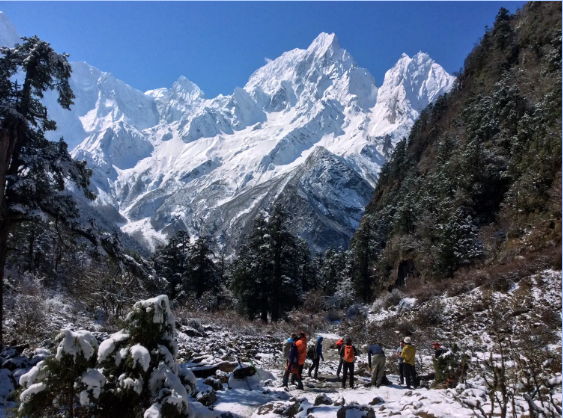
Nepal is home to some of the world’s most remarkable trekking routes, and the Manaslu region stands out for its combination of dramatic Himalayan scenery, remote mountain villages, Buddhist culture, and challenging high-altitude trails. For travelers looking beyond the more established trekking routes, Manaslu circuit treks provide an opportunity to explore the diverse landscapes surrounding Mount Manaslu.
For those looking for a more culturally immersive and remote experience, Manaslu Tsum Valley treks combine the classic Manaslu region with the secluded Tsum Valley. The valley is known for its Tibetan-influenced culture, Buddhist monasteries, traditional villages, and relatively untouched mountain environment.
Although the two trekking experiences share part of the same region, they differ in route, duration, difficulty, and cultural focus.
What Are Manaslu Circuit Treks?
Manaslu circuit treks take travelers around the Manaslu massif through the Budhi Gandaki Valley and across the high Larke Pass.
Mount Manaslu rises to 8,163 meters and dominates much of the surrounding landscape. The trek gradually moves from lower river valleys and subtropical forests toward alpine terrain and high mountain landscapes.
Along the route, trekkers encounter traditional settlements, suspension bridges, waterfalls, monasteries, and spectacular views of Manaslu and neighboring peaks.
Highlights of the Manaslu Circuit
The Manaslu Circuit offers a wide variety of experiences, including:
- Mount Manaslu views
- Budhi Gandaki River valley
- Larke Pass
- Traditional Himalayan villages
- Buddhist monasteries
- Alpine landscapes
- Rhododendron and pine forests
- Mountain viewpoints
- Tibetan-influenced communities
- Remote trekking trails
One of the defining features of the route is the gradual transformation of the landscape as elevation increases.
Typical Manaslu Circuit Route
The exact itinerary varies depending on road conditions, acclimatization requirements, and trekking preferences. A typical journey begins after a drive from Kathmandu toward the trailhead.
The lower section follows the Budhi Gandaki River through villages and forests. As the trail gains elevation, the scenery becomes more alpine.
Important settlements along the route may include Jagat, Deng, Namrung, Samagaon, and Samdo before the trail reaches the Larke Pass area.
After crossing Larke Pass, the route descends toward the Marsyangdi Valley and eventually connects with the Annapurna trekking region.
Larke Pass Crossing
Crossing Larke Pass is one of the major challenges of Manaslu circuit treks.
The pass reaches approximately 5,106 meters and involves a long day of trekking over high-altitude terrain.
Trekkers usually begin early to take advantage of stable morning conditions and allow sufficient time for the crossing.
Proper acclimatization is essential before attempting the pass.
Manaslu Tsum Valley Treks
Manaslu Tsum Valley treks add another dimension to the classic Manaslu experience.
Tsum Valley is a culturally rich Himalayan valley located in the northern part of the Gorkha region. Its communities have strong Tibetan cultural influences, reflected in architecture, monasteries, prayer flags, mani walls, and local traditions.
The valley’s relative remoteness makes it particularly appealing to travelers seeking a quieter trekking experience.
Why Visit Tsum Valley?
Tsum Valley is known for its distinctive cultural heritage and peaceful mountain environment.
Trekkers may encounter:
- Ancient monasteries
- Traditional stone villages
- Mani walls
- Prayer flags
- Buddhist stupas
- Himalayan forests
- Mountain views
- Local Tibetan-influenced traditions
The valley also provides opportunities to learn about the lifestyle of communities that have maintained many traditional practices over generations.
Tsum Valley Monasteries
Monasteries are an important part of the Tsum Valley experience.
Depending on the itinerary, trekkers may visit important Buddhist sites and monasteries in villages throughout the valley.
Mu Gompa is one of the notable destinations in the upper Tsum Valley and is situated in a dramatic mountain environment.
Rachen Gompa is another important religious site associated with the valley.
Visitors should behave respectfully at religious sites and follow local customs regarding photography and access.
Manaslu Circuit vs. Tsum Valley Trek
Both routes offer spectacular mountain scenery, but their focus differs.
Manaslu Circuit
The Manaslu Circuit is particularly suited to trekkers who want:
- A complete circuit-style Himalayan journey
- High-altitude trekking
- Larke Pass
- Dramatic mountain landscapes
- Diverse ecological zones
- Remote villages
Tsum Valley
The Tsum Valley extension is especially appealing to travelers interested in:
- Buddhist culture
- Monasteries
- Traditional villages
- Tibetan-influenced heritage
- A quieter trekking environment
- Cultural exploration
Combining Tsum Valley with the Manaslu Circuit creates a longer journey that incorporates both cultural exploration and high-altitude trekking.
Difficulty and Fitness
Both routes require a reasonable level of fitness.
The Manaslu Circuit becomes increasingly challenging as the trail reaches higher elevations. Long walking days, steep sections, changing weather, and the Larke Pass crossing require preparation.
The Tsum Valley section also includes substantial uphill and downhill walking, although the main challenge depends on the selected itinerary and elevation profile.
Regular walking, hiking, stair climbing, and cardiovascular training can help prepare trekkers.
Altitude and Acclimatization
Altitude management is one of the most important considerations on these treks.
The Manaslu region reaches high elevations, particularly around Samagaon, Samdo, and Larke Pass.
Trekkers should allow sufficient acclimatization days and avoid rushing the itinerary.
Symptoms such as headache, dizziness, nausea, unusual fatigue, or difficulty breathing should be taken seriously. Anyone experiencing significant altitude-related symptoms should immediately inform their guide and follow appropriate medical advice, including descending when necessary.
Best Time for Manaslu Treks
Spring and autumn are traditionally considered the main trekking seasons.
Spring
March to May generally brings increasingly warmer temperatures, blooming rhododendrons at lower elevations, and suitable conditions for trekking.
Autumn
September to November is popular for relatively stable conditions and often clear mountain views.
Winter can bring heavy snow and very cold conditions at higher elevations, particularly around Larke Pass.
The monsoon season can bring rain, muddy trails, landslides, and reduced visibility at lower elevations.
Mountain weather can change quickly, so current forecasts and trail conditions should always be checked.
Accommodation and Food
Tea houses and trekking lodges provide accommodation along established sections of the Manaslu and Tsum Valley routes.
Facilities become more basic as the trail moves into remote and higher areas.
Common meals include:
- Dal bhat
- Rice
- Noodles
- Soups
- Vegetables
- Eggs
- Bread
- Potatoes
- Simple Tibetan-influenced dishes
Travelers should carry snacks for longer trekking days.
Permits and Guide Requirements
The Manaslu region is subject to trekking regulations, and permits are required.
Requirements can vary according to the specific route, season, and current government regulations. The Tsum Valley is also a regulated trekking area.
Travelers should confirm current permit requirements and guide or group requirements with a registered trekking agency before departure.
Responsible Trekking
The Manaslu and Tsum Valley regions contain fragile mountain environments and communities that depend partly on tourism.
Trekkers can support responsible tourism by:
- Avoiding single-use plastics
- Carrying reusable water bottles
- Respecting local customs
- Avoiding damage to religious sites
- Not littering
- Using established trails
- Supporting local tea houses and businesses
- Avoiding unnecessary disturbance to wildlife
Respectful trekking helps preserve the region for local communities and future visitors.
Key Points to Remember
- Manaslu circuit treks combine spectacular Himalayan scenery, remote villages, and a challenging crossing of Larke Pass.
- Manaslu Tsum Valley treks add cultural depth through traditional villages, monasteries, and Tibetan-influenced heritage.
- Mount Manaslu reaches 8,163 meters and dominates the surrounding landscape.
- Larke Pass is approximately 5,106 meters high and requires proper acclimatization.
- Tsum Valley is particularly known for its Buddhist culture and relatively remote environment.
- Mu Gompa and Rachen Gompa are among the notable cultural sites in the valley.
- Spring and autumn are traditionally popular trekking seasons.
- The routes require good physical preparation and appropriate high-altitude equipment.
- Tea houses provide basic accommodation and meals along much of the trekking route.
- Permit and guide requirements should be confirmed before departure.
- Weather and trail conditions can change quickly in the Himalayas.
- Responsible trekking is important for protecting local communities and the mountain environment.
Conclusion
Manaslu circuit treks offer an impressive combination of high-altitude adventure, dramatic Himalayan scenery, traditional villages, and cultural experiences. The journey around Mount Manaslu culminates in the challenging crossing of Larke Pass, making it a rewarding choice for trekkers seeking a demanding Himalayan adventure.
Meanwhile, Manaslu Tsum Valley treks provide a deeper cultural experience through remote villages, Buddhist monasteries, traditional architecture, and Tibetan-influenced heritage. Combining Tsum Valley with the Manaslu Circuit allows travelers to experience both the cultural richness and high-mountain landscapes of this remarkable region.
With careful preparation, appropriate acclimatization, reliable local guidance, and respect for the environment and local communities, a trek through the Manaslu and Tsum Valley regions can become an unforgettable Himalayan experience.

